The Roots Health Centers
Lakewood Ranch, FL
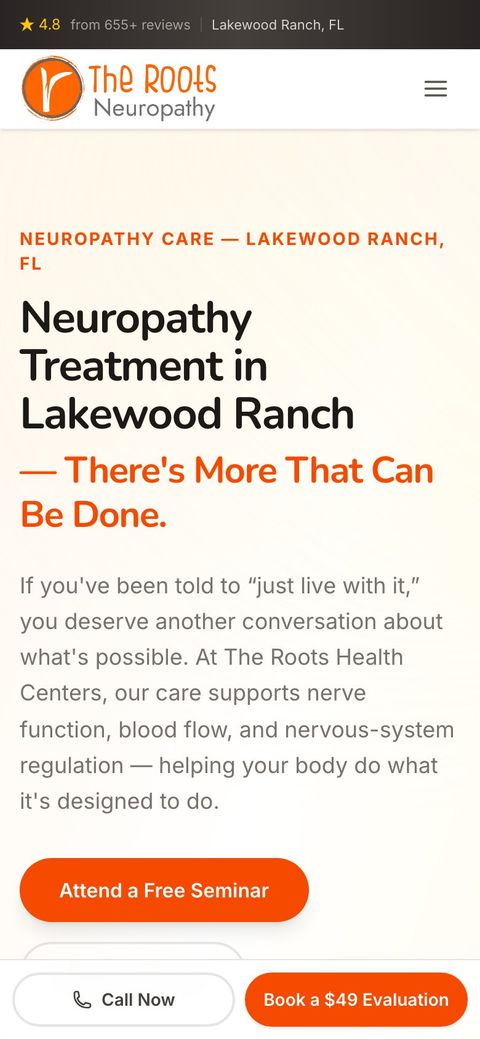
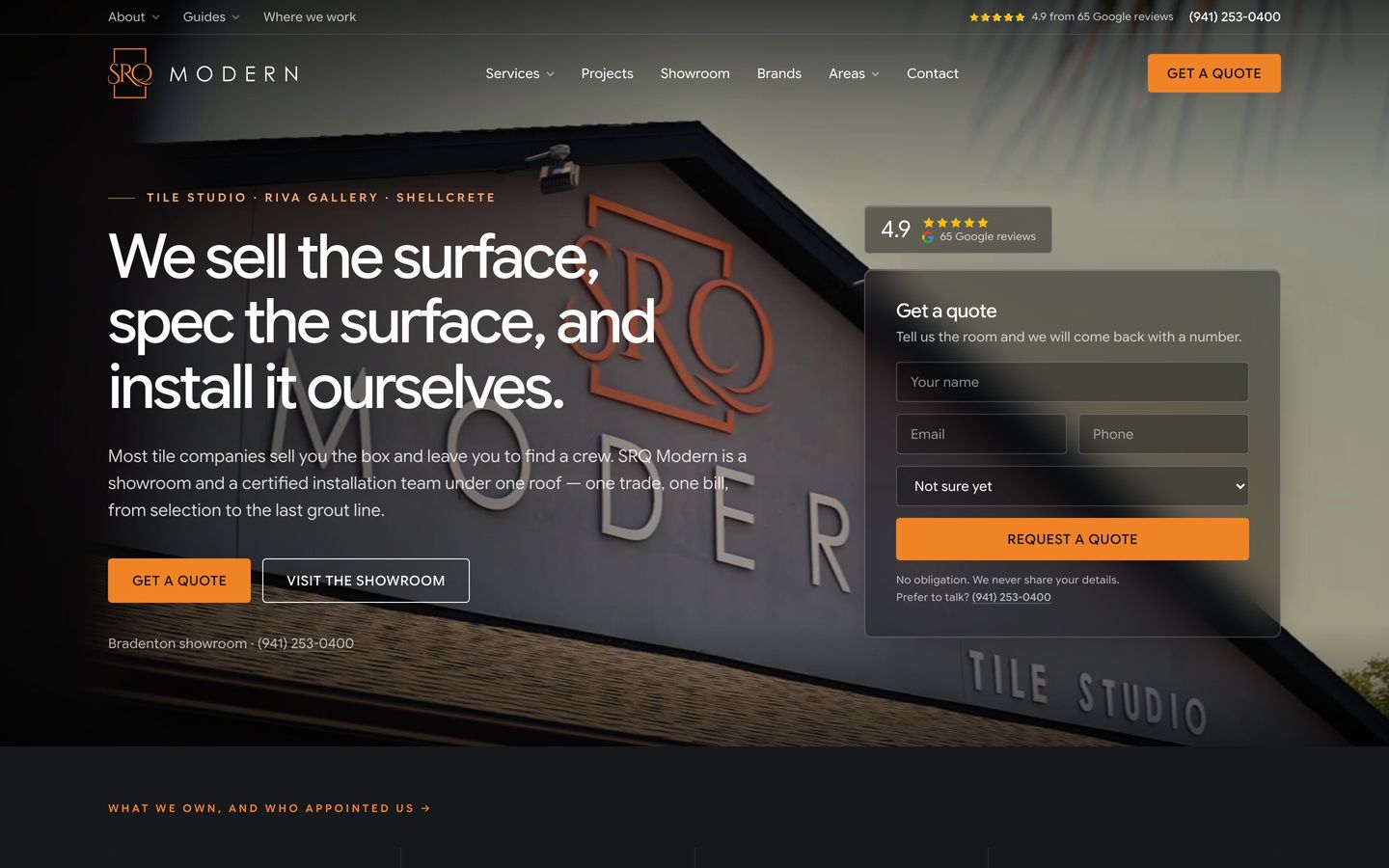
Three clinics, three websites, one platform — corrective chiropractic, neuropathy and pediatrics.
- Three marketing sites on one shared platform and CMS
- Real patient stories on camera, not stock
- A three-step diagnostic path built for people who have already tried everything

2 imagesdrag to move · click to open
Three audiences, three front doors
The instinct with a multi-service practice is to build one website with a lot of tabs. It is cheaper on day one and it costs you every day after, because the person searching for neuropathy help and the parent looking for a pediatric chiropractor need entirely different pages, different proof and different language.
So Roots got three front doors. Each site is written for one visitor and structured around what that visitor is actually trying to find out.
One platform underneath
Three sites is only sustainable if it is not three codebases. All three run on a shared platform with one content system and one dashboard, so a component fix, an SEO improvement or a new booking flow ships once and appears everywhere it belongs.
Six hundred and sixty-nine icons
Stock iconography was rejected early and an AI-generated set after it. What the brands run on instead is a library Dinko drew himself — 669 flat pictograms in orange and ink, one for every symptom, spinal segment, therapy device and pregnancy trimester the three practices talk about.
That is an unreasonable amount of drawing for a website, and it is the reason the three sites read as one practice rather than three templates wearing the same colour.
Getting the clinic's own data back
The practice had used the same Meta ads vendor on and off for eight years — genuinely good, and the only one of three agencies who had ever wired their pixel correctly. But every lead lived in his system, against a pixel shared across chiropractic practices nationally. If the relationship ever ended, eight years of history walked out with it.
The move was a mirror rather than a migration: ask for a webhook, not account access. An API token would have been more powerful and would almost certainly have been refused, because it exposes his entire book of business. A webhook sends this clinic's leads only, changes nothing about how he works, and he can switch it off whenever he likes. The smaller ask is the one that gets a yes.
What it protects is ordinary and valuable: the office manager has spent eighteen months hand-recording which leads actually became patients — the exact fact the ad platforms are missing. That fact lived in one spreadsheet cell. It now has somewhere permanent to live, and a route back to the platforms that need it.
Proof over adjectives
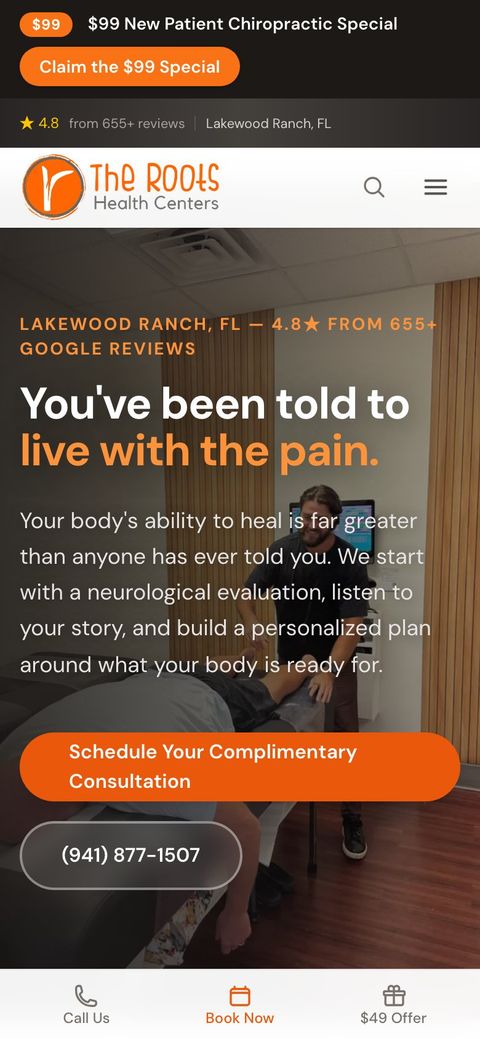
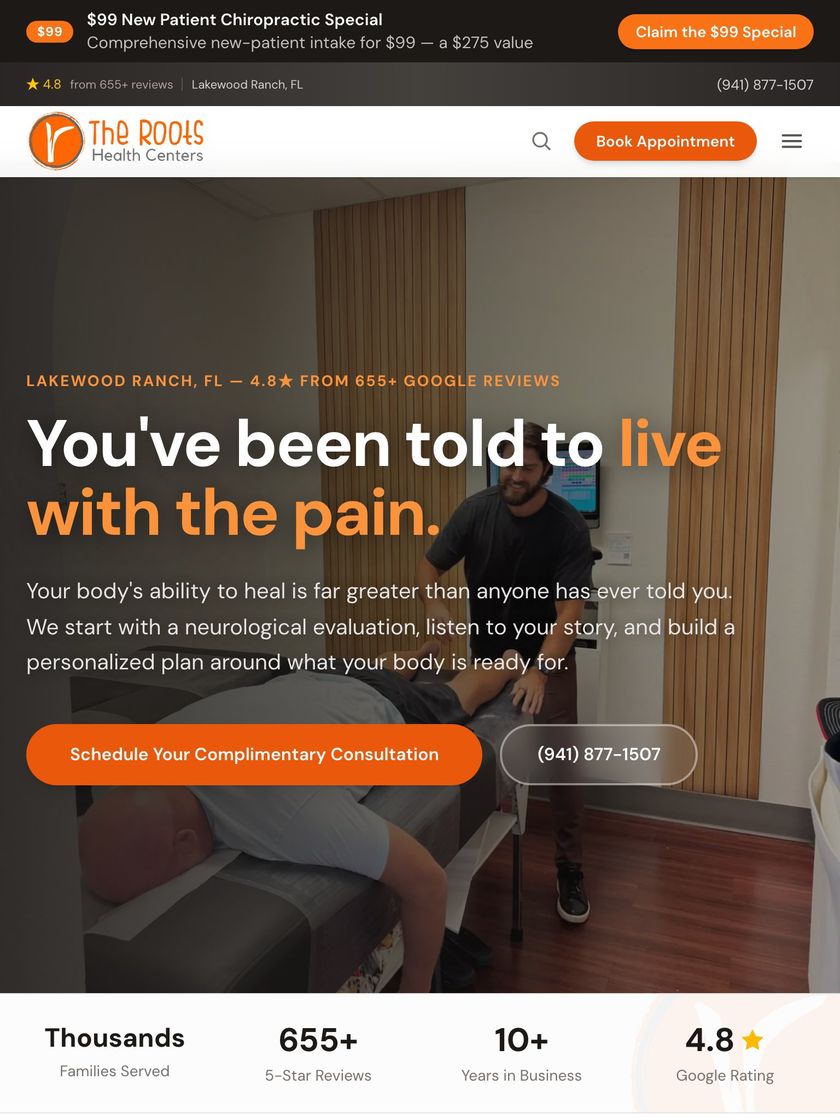
The homepage opens with a patient telling their own story on camera. No actor, no script. For a practice asking people to try one more thing after everything else has failed, a real face doing the explaining is worth more than any headline we could write.
One practice, three genuinely different audiences. An adult in chronic pain researching corrective chiropractic, a neuropathy patient looking for a specific protocol, and a parent looking for pediatric care are not the same visitor, and a single site trying to serve all three serves none of them well.
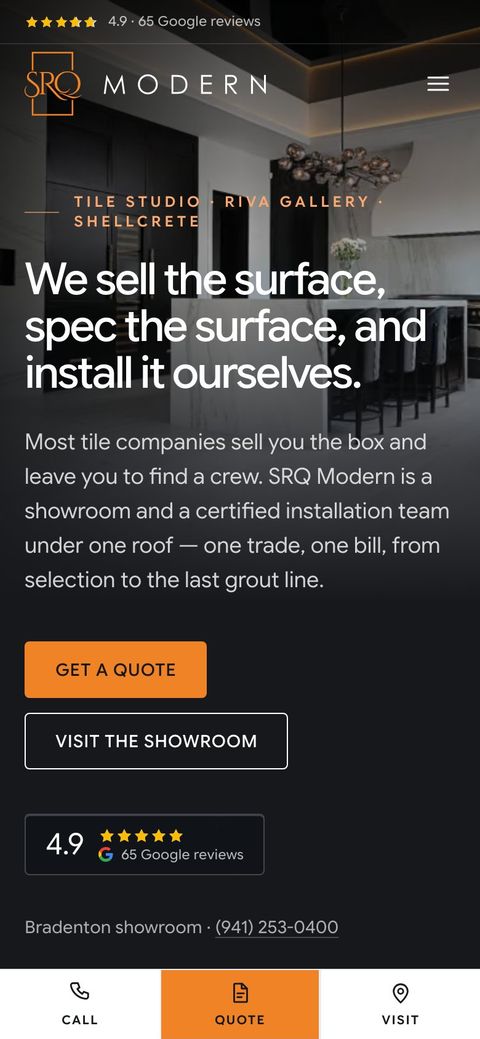
Three separate marketing sites — The Roots Health, The Roots Neuropathy and Little Roots Pediatric — each with its own voice, structure and search footprint, all running on one shared platform with a single CMS and a single dashboard behind them. Adding a site costs a fraction of building one, and a fix to the shared library lands on all three at once.
- Three marketing sites on one shared platform, CMS and dashboard
- 669 hand-drawn pictograms rolled out across all three brands
- A lead feed the clinic owns, mirrored from the ad vendor's system
- A front-desk cockpit that turns daily data entry into marketing signal
Trusted by leading Florida businesses