
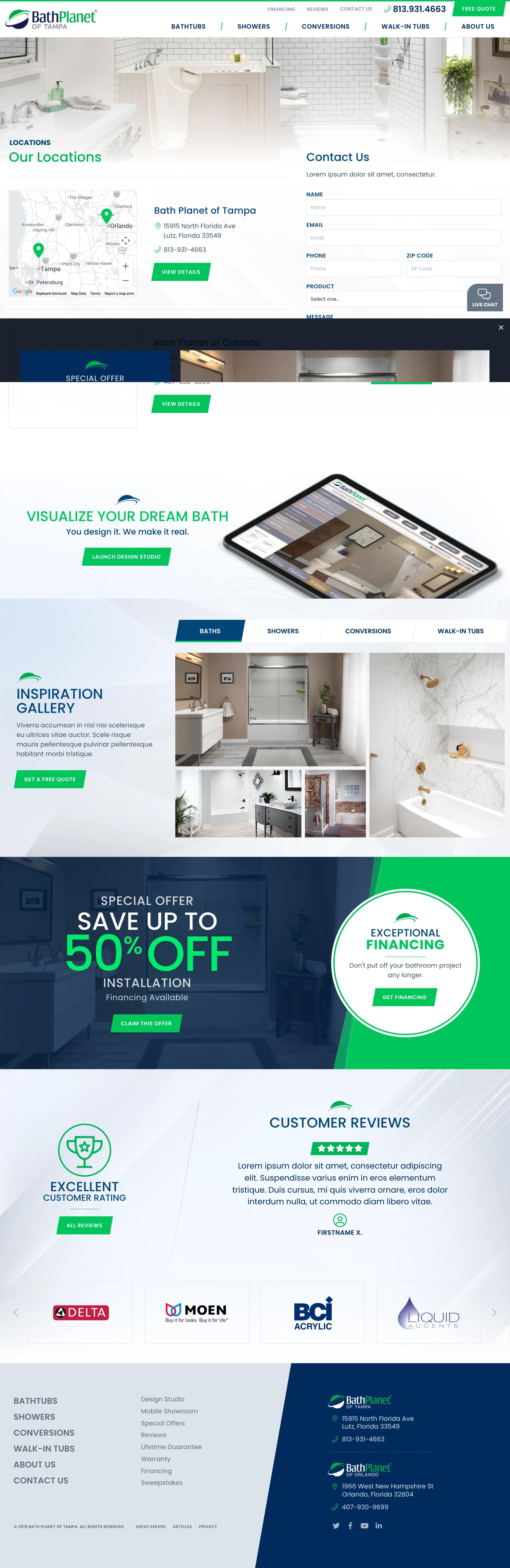
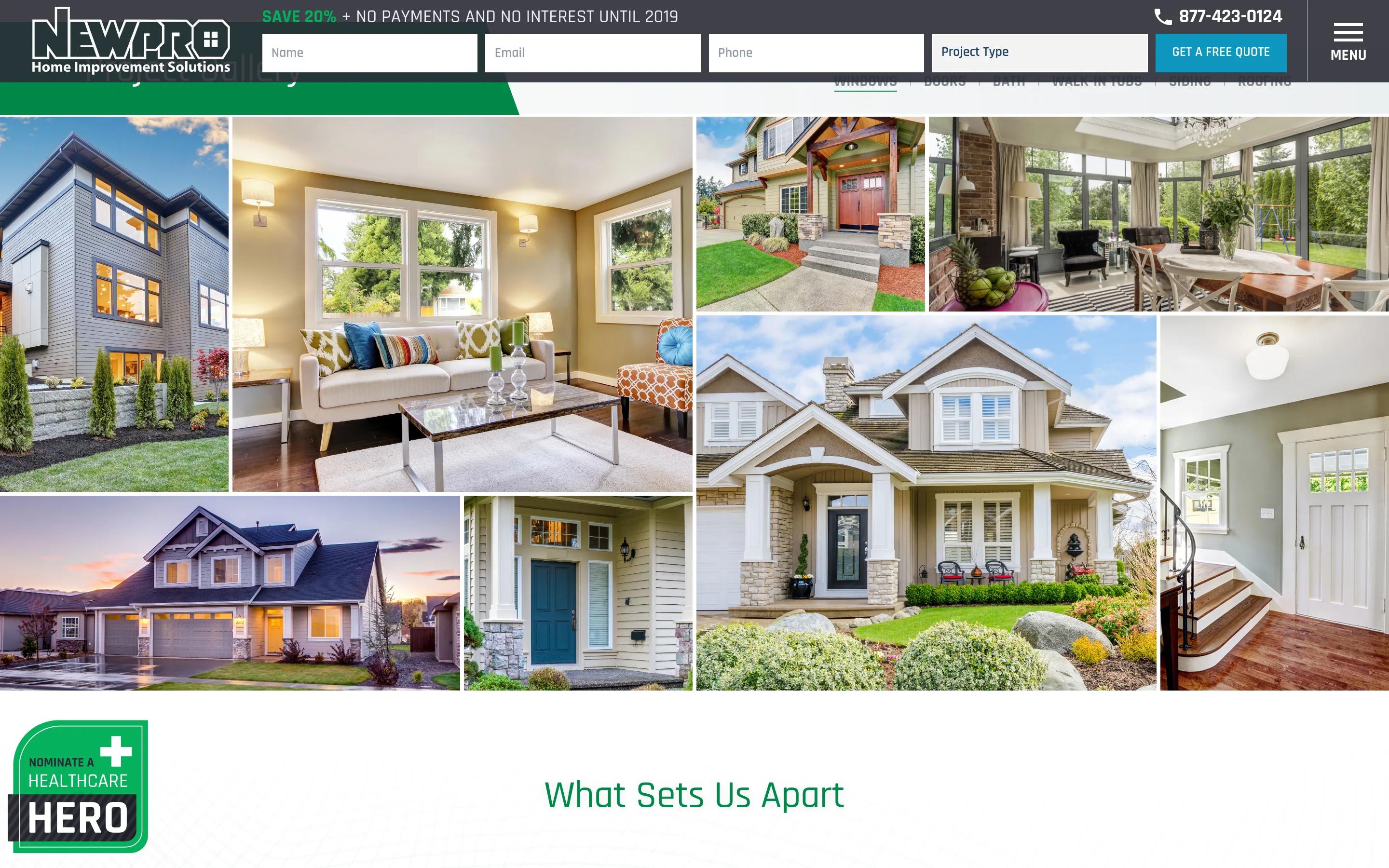
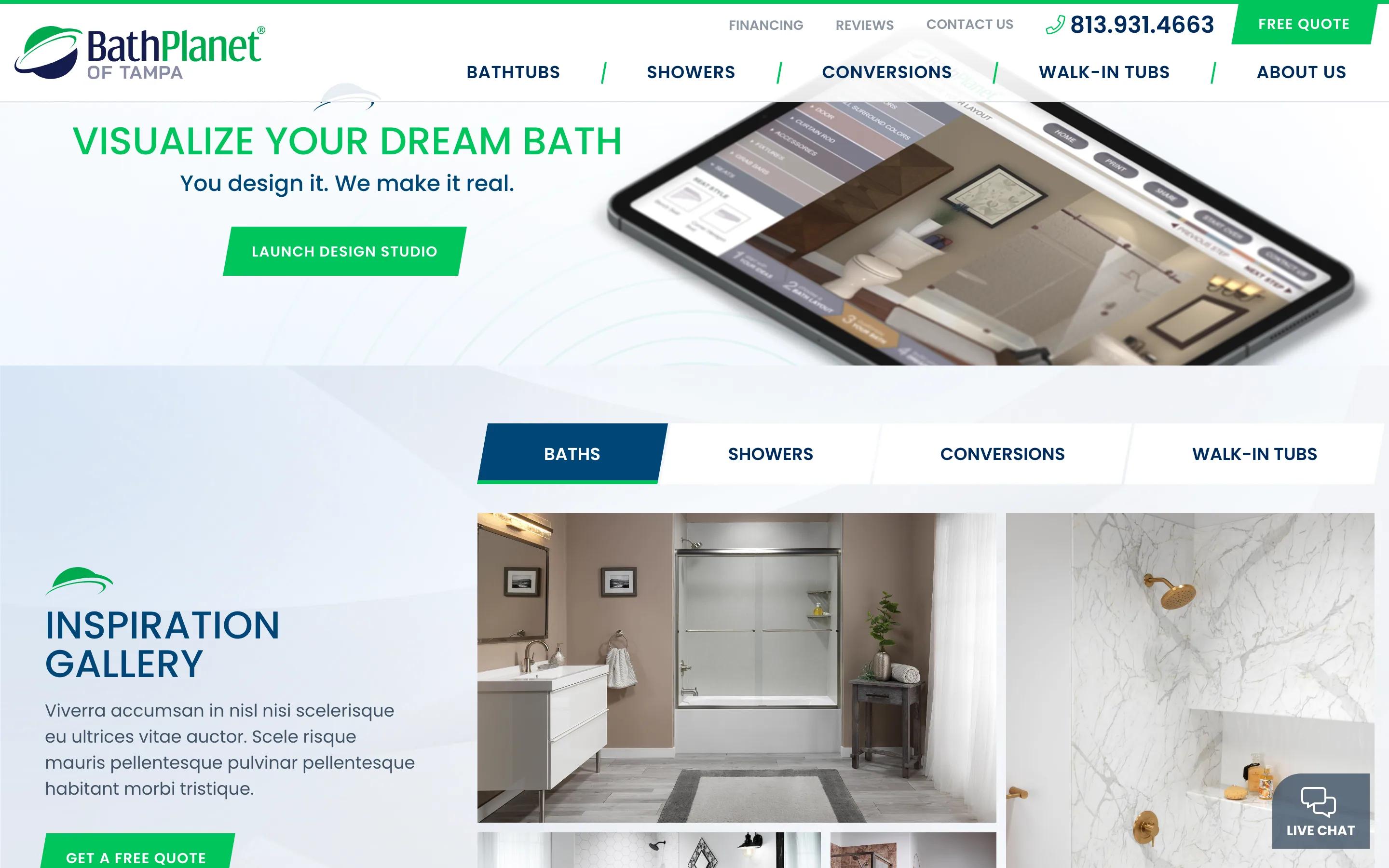
Kitchen, bath, and whole-home remodelers live on portfolio. Before/after photos are the highest-converting content type in the vertical. A remodeler with 50 deep case studies, each with 15-30 high-quality photos, beats a remodeler with a slick brand and a thin portfolio every time. The work has to show up on the site, plentifully, organized, and searchable.
What remodeler marketing needs
- Portfolio architecture — every project gets a case study with 15-30 photos, scope, timeline, finishes, and (where allowed) price band.
- Category routing — visitors land on "kitchen remodeling" pages, not on a generic homepage. Send paid traffic to category-specific service pages.
- Showroom or studio booking — most remodelers have an in-person consultation step. The site has to make that booking effortless.
- Real photography. Stock photos are death in this vertical. Visitors will sniff out stock-photo kitchens in 3 seconds.
- Designer recognition — if the remodeler has worked with named interior designers, surface the relationships.
The photography problem
The single biggest constraint for most remodelers' marketing is photography. A kitchen remodel finishes, the crew leaves, the owner takes 2-3 phone photos in bad light, and that's what goes on the website. Real professional photography after every project — even just 4-6 hours per project — is the marketing investment with the highest long-run ROI for any remodeler. The photos become the portfolio. The portfolio becomes the marketing. Skip the photography and you're capping your marketing potential before you start.
Trade-show and home-show presence
Remodelers in markets with home shows (the FL Home Show, the Sarasota Home & Garden Show, regional equivalents) have a high-converting offline channel that pairs with digital. The home-show lead comes warm — they walked the booth, talked to the team, took the literature. The follow-up site experience has to feel continuous with the show experience. Most remodelers fumble this by sending show leads to a generic homepage. Smart move: a dedicated landing page just for show follow-up, with team photos, project gallery, and a custom CTA.
Pairs with the Lead-Generation Websites cluster and the Brand & Identity for Premium Clients cluster.
How I approach industry-specific engagements
My approach to vertical-specific work: keep the universal mechanics (Local SEO, lead-gen architecture, paid ads structure, brand identity discipline) and calibrate them to the vertical's specific buyer behavior, seasonal patterns, regulatory landscape, and competitive density. The mechanics don't change. The calibration changes everything. Most agencies sell either the generic playbook (which underperforms in every vertical) or the over-customized custom build (which costs too much and ships too slow). The middle path is universal-mechanics-plus-vertical-calibration, productized at three tiers so the cost scales appropriately with the engagement.
The clusters that connect every vertical: Local SEO for Contractors (universal), Lead-Generation Websites (universal), Paid Ads for Home Services (universal but calibrated for healthcare/regulated verticals), Brand & Identity for Premium Clients (more important for trust-driven verticals).
Want a second look at your site?
If you want a real teardown of how this plays on your actual site, send me your URL and I'll tell you exactly where this applies. The audit runs server-side, checks 19 specific signals across SEO, performance, mobile, and accessibility, and surfaces a score with prioritized fixes. No sales pitch attached — the score is yours either way, whether or not you ever talk to me.
If you'd rather talk it through with a real person, send me a note and we'll set up 30 minutes. I'll come prepared — I'll have already looked at your site before the call, and the conversation starts from what I see, not from a generic discovery script. The fastest way to know whether what's described above is the right next move for your specific situation.


