


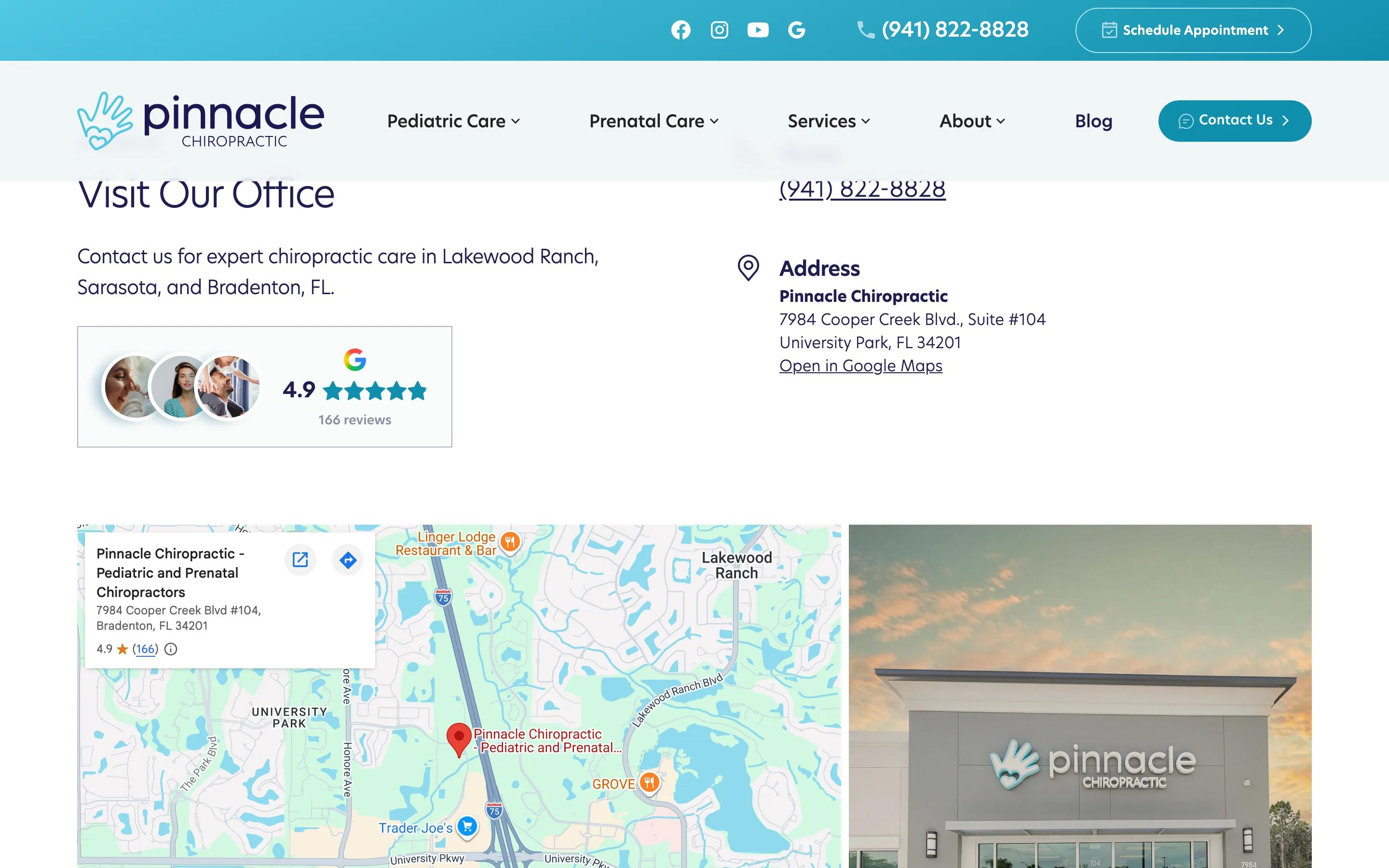

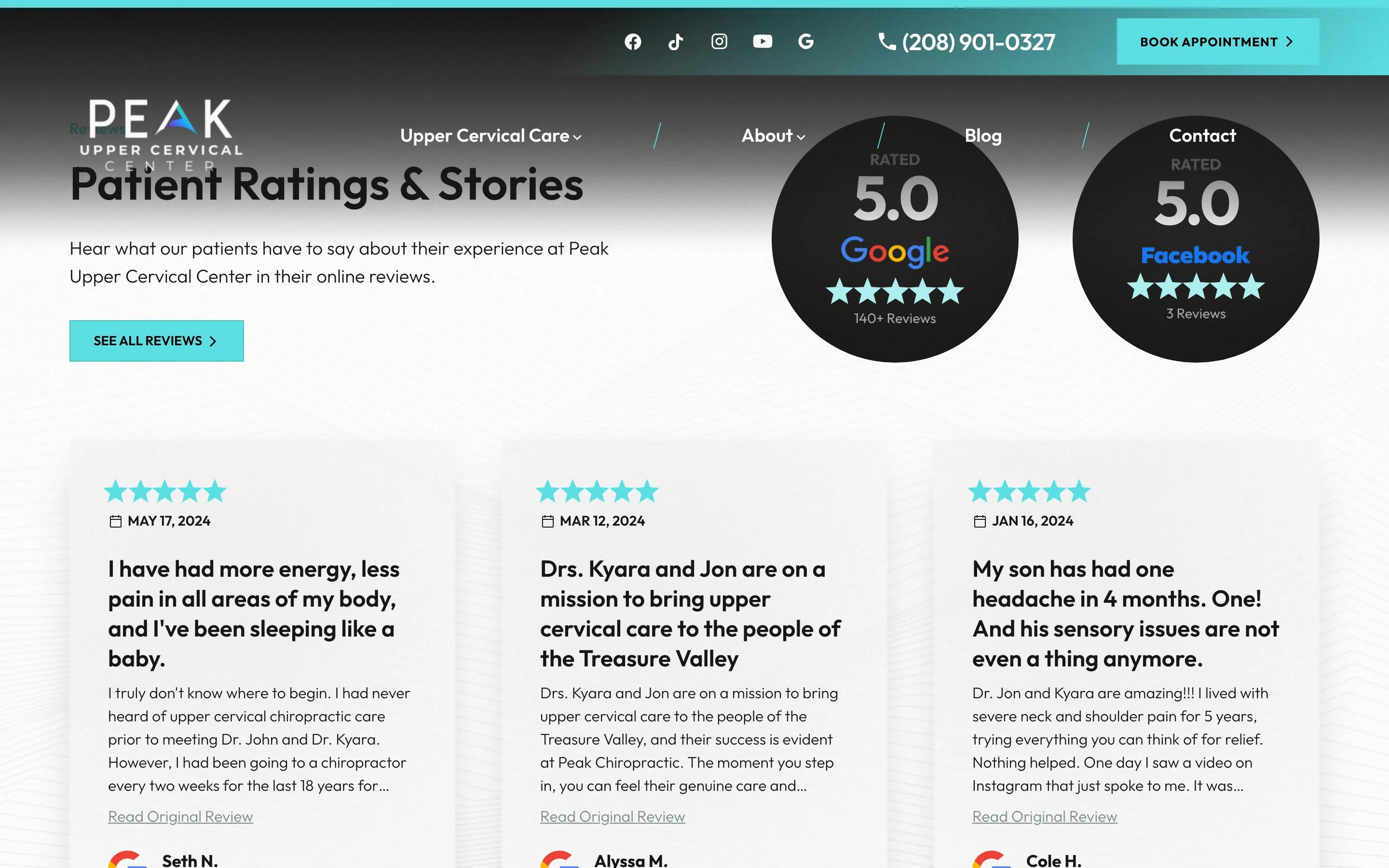
Chiropractic is the vertical I've spent the most time inside. Pinnacle Chiropractic went from 200 organic clicks/month to 47,000 visitors/month over a multi-year arc — and after Google's AI Overview shift, they still hover above 5,000 monthly visitors and rank for thousands of keywords. The Roots Health Centers — my flagship R&D platform — is built around modern wellness-positioned chiropractic and pediatric chiro. That's the work I R&D every new pattern on first.
Modern wellness chiropractic is fundamentally different from insurance-mill chiropractic. The wellness practice is cash-pay, brand-driven, lifestyle-positioned, and aimed at families who see chiropractic as part of a broader wellness routine. The insurance-mill practice is volume-driven, pain-positioned, and aimed at patients with insurance benefits. Different marketing, different brand, different web architecture.
What modern wellness chiropractic needs
- Brand identity that signals wellness, not pain. See Brand & Identity for Premium Clients.
- Patient pipeline mechanics — intake forms, scheduling integration, payment-flow integration with practice management software.
- Content engine focused on wellness, family chiropractic, prenatal/pediatric chiropractic (the highest-LTV segments).
- Local SEO — see Local SEO for Contractors (the playbook is identical for healthcare).
- Ad compliance — healthcare ads have specific Google Ads compliance requirements. Done wrong, accounts get suspended.
ChiroCare Pro
I'm productizing the chiropractic-vertical platform into a managed product called ChiroCare Pro — built on the Roots template, productized for the wellness-positioned chiropractic market specifically. If you're a chiropractor reading this and you want a brand-modernized, lead-engine-built, fully-managed digital platform without the agency-tier price tag, that's the product in development.
The wellness practice's marketing stack
A modern wellness chiropractic practice runs on: brand identity that signals premium wellness; a content engine focused on family, prenatal, and pediatric chiropractic; an automated lead-to-first-visit pipeline (welcome emails, intake form, scheduling integration); a review velocity system (every patient asked within 24 hours of every visit); and ongoing retention content (patient education, monthly newsletters, social proof from existing patients). That's the full system. Each piece individually is mechanical. The integration is where the LTV compounds.
Why I R&D on this vertical
Chiropractic is the vertical I R&D every new pattern on first. The Roots Health Centers platform is where I test new design systems, new conversion mechanics, new ad strategies, new content engines — before lifting them to other client engagements. The chiropractic vertical has just the right combination of complexity (recurring patient relationships, multiple services, multiple service lines) and clarity (one buyer, one decision, one purchase intent) to be the ideal testing ground.
Want a teardown of your current chiropractic website? Send me your URL.
How I approach industry-specific engagements
My approach to vertical-specific work: keep the universal mechanics (Local SEO, lead-gen architecture, paid ads structure, brand identity discipline) and calibrate them to the vertical's specific buyer behavior, seasonal patterns, regulatory landscape, and competitive density. The mechanics don't change. The calibration changes everything. Most agencies sell either the generic playbook (which underperforms in every vertical) or the over-customized custom build (which costs too much and ships too slow). The middle path is universal-mechanics-plus-vertical-calibration, productized at three tiers so the cost scales appropriately with the engagement.
The clusters that connect every vertical: Local SEO for Contractors (universal), Lead-Generation Websites (universal), Paid Ads for Home Services (universal but calibrated for healthcare/regulated verticals), Brand & Identity for Premium Clients (more important for trust-driven verticals).
Want a second look at your site?
If you want a real teardown of how this plays on your actual site, send me your URL and I'll tell you exactly where this applies. The audit runs server-side, checks 19 specific signals across SEO, performance, mobile, and accessibility, and surfaces a score with prioritized fixes. No sales pitch attached — the score is yours either way, whether or not you ever talk to me.
If you'd rather talk it through with a real person, send me a note and we'll set up 30 minutes. I'll come prepared — I'll have already looked at your site before the call, and the conversation starts from what I see, not from a generic discovery script. The fastest way to know whether what's described above is the right next move for your specific situation.